
Staking Methods
Building Consistency and Mitigating Risk

When it comes to betting, staking methods are as critical as choosing which bets to place.
A well-thought-out staking plan can help you manage risk, protect your bankroll, and build consistency for long-term success.
Without a clear strategy, even the most promising betting systems can fail due to poor money management.
There are many staking plans available, each catering to different risk tolerances and levels of expertise.
The more complex the method, the greater the potential reward—but also the risk.
Ultimately, choosing the right staking method depends on your betting goals, risk appetite, and ability to stay disciplined.
Two Core Staking Methods for Horse Racing Betting
1. Level-Stake Betting
How it Works:
With this straightforward approach, you bet the same fixed amount (or percentage of your bankroll) on every bet, regardless of the odds or perceived risk.Best For:
Beginners or cautious bettors who want simplicity and prioritization of bankroll management over rapid growth.Example:
With a £1,000 bankroll, you might bet 1% (£10) per race. This amount stays consistent throughout your betting.Benefits:
Simple and easy to track.
Minimizes potential losses during losing streaks.
Downside:
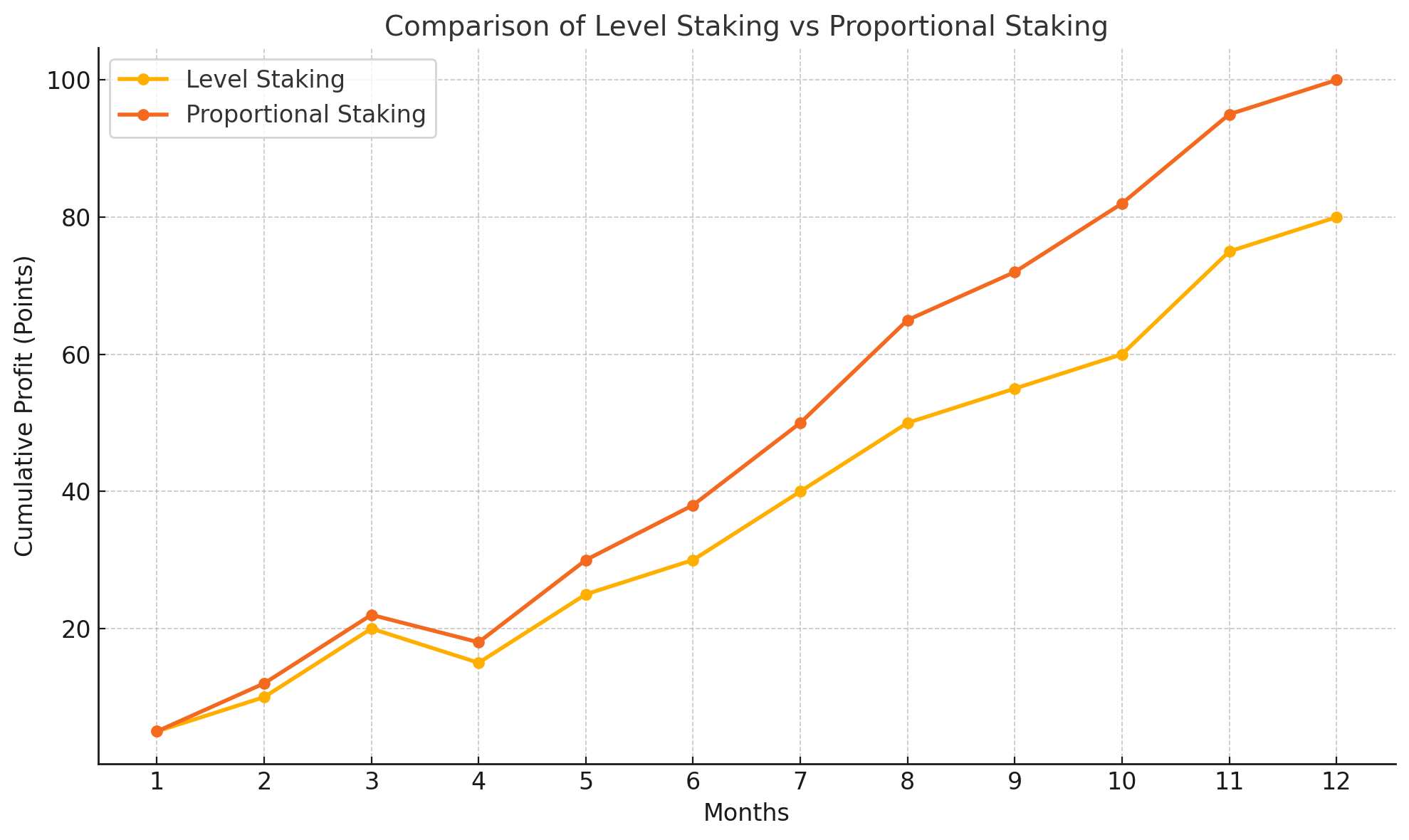
Growth during winning streaks can be slower compared to more dynamic methods.
2. Proportional Staking
How it Works:
This method involves betting a set percentage of your current bankroll. As your bankroll grows, so does your stake. Conversely, if your bankroll decreases, your stake becomes smaller, protecting your remaining funds.Best For:
Intermediate to advanced bettors who prefer a method that naturally adjusts risk based on their available funds.Example:
With a £1,000 bankroll and a 2% staking plan, you’d start by betting £20 per race. If your bankroll grows to £1,200, your stake increases to £24.Benefits:
Ensures risk is relative to your current bankroll, offering natural protection against large losses.
Allows for compounding of winnings over time.
Downside:
Returns during winning streaks may be smaller compared to fixed stakes.
Advanced Staking Systems
Beyond Level-Staking and Proportional Staking, advanced strategies like the Kelly Criterion and Martingale can be considered.
However, these require greater expertise and discipline to execute effectively. For most bettors, especially those new to staking plans, the added complexity may outweigh the potential benefits.
My Recommended Approach
Personally, I find Level-Stake Betting and Proportional Staking to be the most practical and effective for horse racing strategies.
They are easy to manage, adapt well to daily betting routines, and align with a disciplined approach to risk management.
For those with more advanced risk management skills, aggressive staking plans might be worth exploring.
These are often better suited to specific use cases, such as identifying standout horses in particular conditions or betting race by race.
However, these plans come with significantly higher risk and are less suitable for casual bettors or those just starting out.
Staking and Hedger Pro
Hedger Pro does not include an in-built staking system, so managing your stakes is entirely in your hands.
This offers flexibility, allowing you to implement the staking plan that works best for your goals and experience level, but they are applied manually not using automation.
If you’re building a betting system with Hedger Pro, Level-Stake Betting or Proportional Staking are excellent choices. They provide consistency, are easy to apply daily, and are well-suited to most bettors’ needs.
Start Managing Your Stakes Today
Choosing the right staking plan is a crucial step toward creating a sustainable betting strategy.
Whether you prefer the simplicity of Level-Stake Betting or the adaptability of Proportional Staking, the key is staying disciplined and managing your bankroll wisely.
Ready to enhance your betting strategies with powerful research tools?
Visit www.hedgerpro.co.uk to explore how Hedger Pro can give you the edge you need.